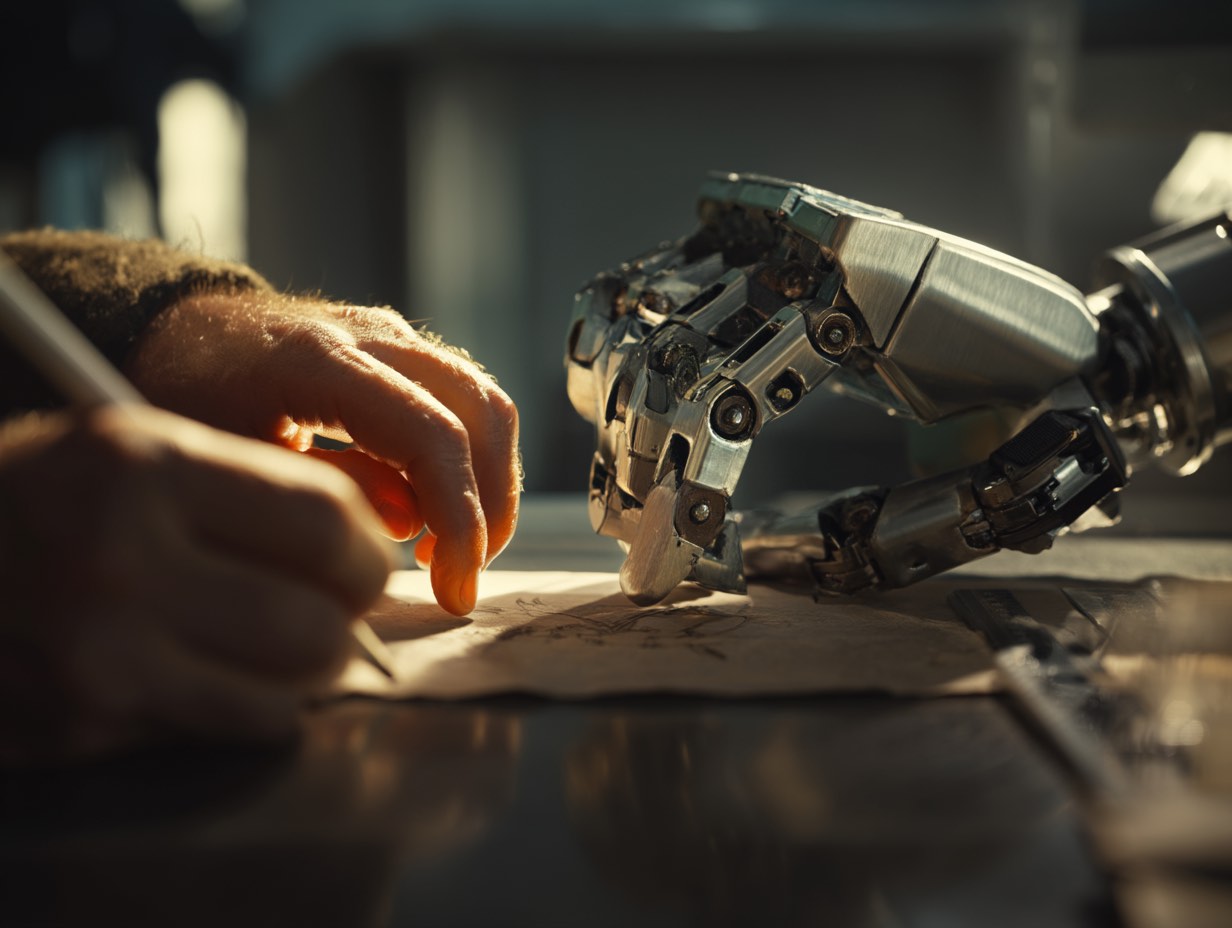
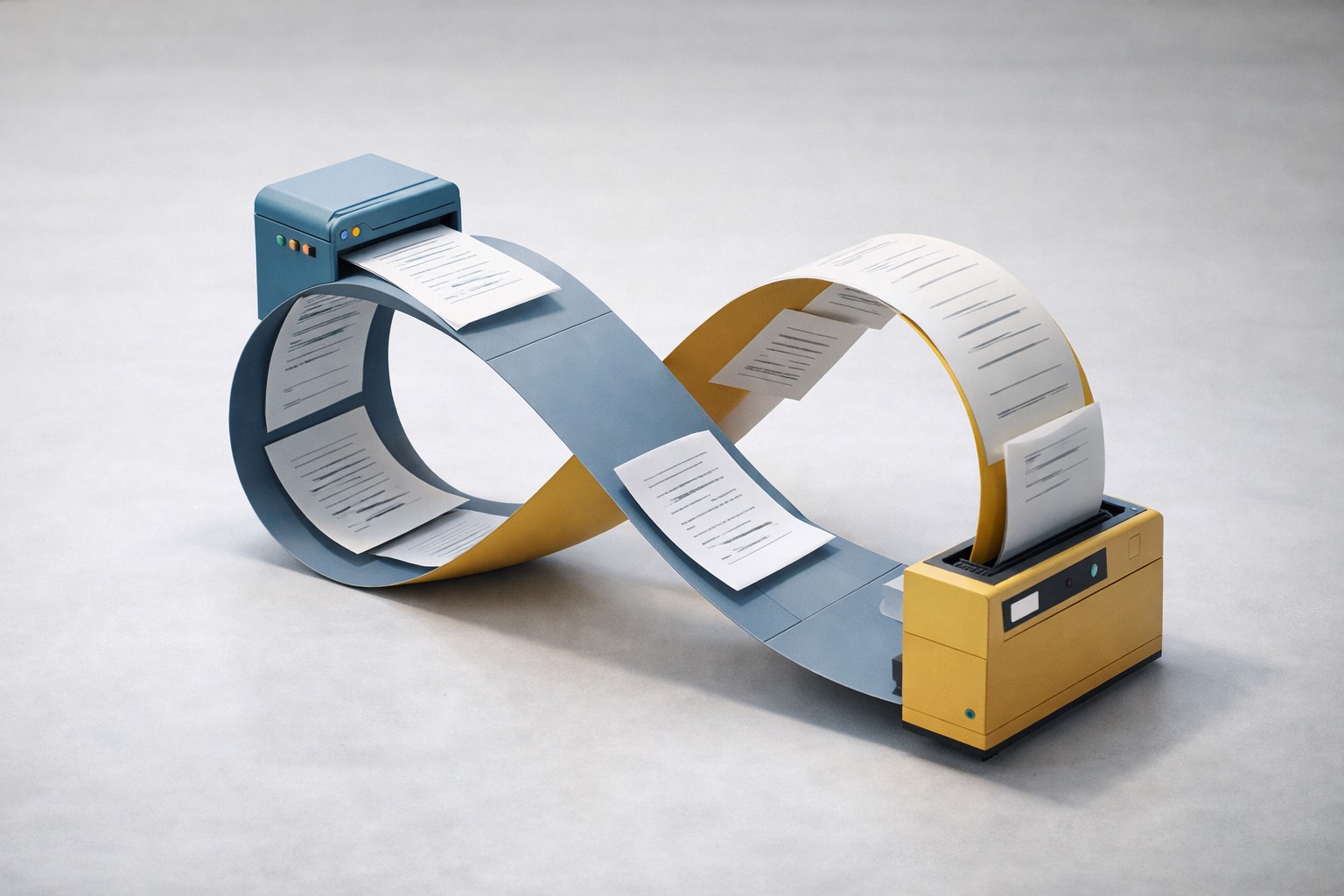
The Office Was Built for a World That's Ending
The things I do most now in work look almost nothing like two years ago.
I voice dictate. And I’m spending way more time thinking, because I’m spending way less time actually executing anything. Voice is roughly three to four times faster than typing — natural speech runs at around 150 words per minute, typing averages 40.
But it’s more than speed. When you dictate, you stop self-editing as you go. You just talk, let your brain run, repeat yourself, think out loud. You’re not worried about getting the sentence perfect because you know the AI will parse it, clean it up, pull out what matters. That’s a completely different cognitive mode than typing. You’re offloading the editing to the tool instead of doing it in your head in real time. It changes how you think.
Most knowledge workers aren’t there yet. Voice dictation is still early adoption — according to a recent article on the topic, it’s starting to spread through offices one employee at a time, gooseneck microphones slowly appearing on desks as workers start murmuring instructions to their computers instead of typing. But the trajectory is clear.
Which is when the office problem started bothering me.
The silent interface
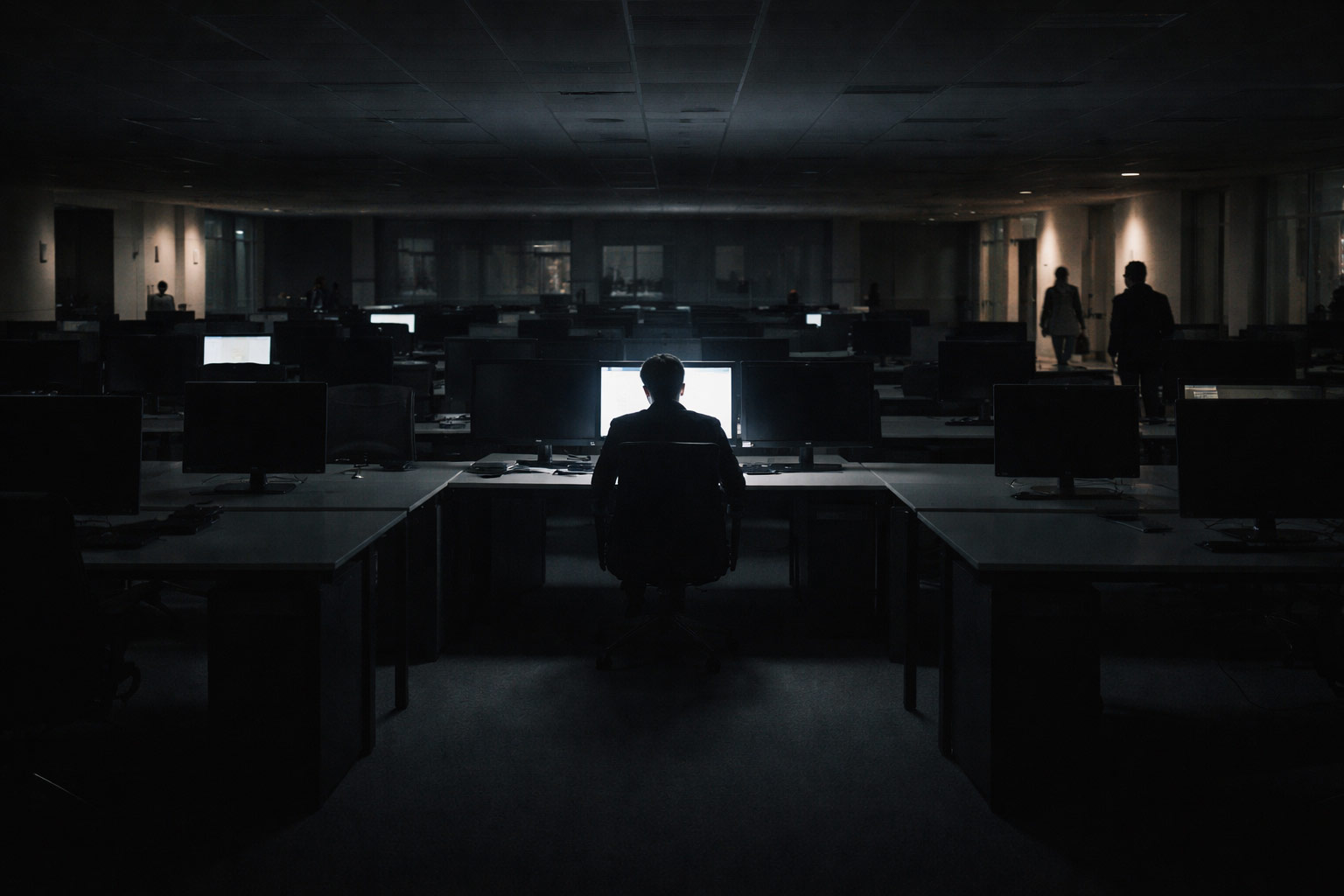
Today’s offices were designed around a silent interface. Keyboard, mouse, screen. The whole physical design assumes your primary input is your hands. Open plan works because everyone is essentially quiet, the background noise is keyboards and murmur, not people dictating to their computers.
Voice breaks that assumption entirely. And not just socially. When someone’s voice dictating next to you, it’s distracting. It pulls your attention. It’s difficult to do deep work when there’s constant speech around you. So voice doesn’t just feel weird in an office. It actively undermines the productivity of everyone nearby.
The office problem
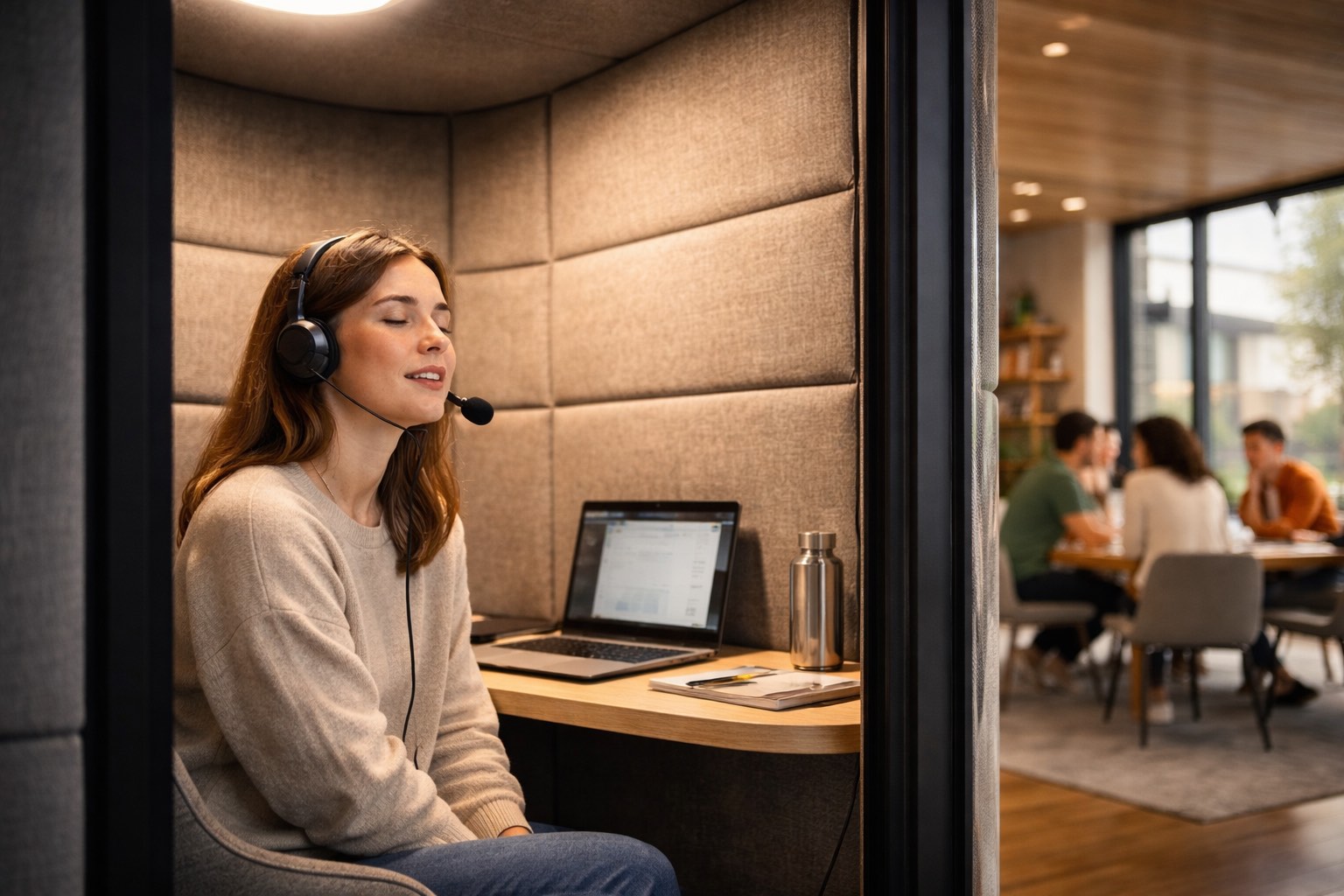
I go into the office and I can’t work the way I work at home. I’m not going to sit and voice dictate around other people — it would distract them as much as it would feel strange to me. We have phone booths. Sometimes I go in there, but that’s weird too. So I default back to typing. Slower, more friction, fighting the tool I’ve gotten used to.
I still get a huge amount of value from being around colleagues. The spontaneous conversations, the energy, the faster decisions you make when you’re in a room with people you trust. That hasn’t changed. If anything it feels more valuable now, precisely because it’s one of the few things AI can’t replicate.
But that’s exactly the point. The reason I go to the office should be for the human stuff. Not to sit in silence typing slowly because I can’t speak freely.
What if we designed for voice?
What would the office look like if it was built for voice instead of keyboards? I think it would have to split in two.
One optimised entirely for human collaboration. The whiteboard sessions, the informal conversations, the things that don’t work over a call. Design everything around making that easier.
And one designed for AI work. Acoustic design as a first principle. Spaces where you can speak freely, think out loud, work at the speed your tools now allow. Not phone booths as an afterthought.
But even that’s just one step in a longer chain. If voice solves the interface problem, what solves voice’s social friction? Subvocalisation. Speaking without making sound. There’s actual research on this out of MIT, and it’s already spun out into a company. Tiny neuromuscular signals captured by a device, turned into input. You could sit in an open office having a full conversation with AI and nobody would know.
Beyond that, brain interfaces. You’re not speaking at all. You’re thinking, and it’s being computed somewhere. Sounds strange. But you can see where this is heading. Input is getting more natural, more frictionless, less dependent on physical movement with every iteration.
The office redesigned for voice today might not make sense again in another ten years.
The work itself is changing
The office problem matters less if the work itself is changing. And it is. More and more, the job is directing AI agents, not doing the work yourself. You’re not producing output. You’re instructing something else to produce it. Where you sit and how you type matters a lot less when you’re not the one executing. I voice dictated most of this post while walking my baby through the park.
Scale that up. In five years, this might be how most knowledge work gets done. And then you have to ask: what if in ten years the agents need less direction? What if in fifteen years the question isn’t how many humans you need to oversee them, but whether you need humans to oversee them at all?
That’s the AGI question.
Where this actually goes
Offices, keyboards, voice — none of that’s really the point. Knowledge work is reorganising itself because the tools, the interface, and the work itself are all changing at once.
Nobody’s been here before. Every other technological transition happened over decades. This one is happening in years.
The office problem I described is real and immediate. But it might be solving for a world that doesn’t last very long.
I wouldn’t be surprised if we do very little about it. Or at least by the time we do, it doesn’t matter.